‘We need writers who reflect on new ways of life’

From binge-watching and peanut crisps to climate collapse: an email exchange with the writer Jonas Lüscher.

So is the problem already too big to be solved within capitalism? Would any solution become an exclusive commodity?

In a way, yes. But it won’t work without capitalism either. And certainly not without the economy. At least in the short term, certain effects are simply easiest to achieve through pricing. That may sound more contradictory than it actually is on closer inspection. The situation is so dire that we must think in terms of short-term emergency mode, as well as the medium and long term. However, the long-term perspective usually clashes with political realities and concrete constraints such as coalition agreements and parliamentary terms. This means we cannot rely solely on politics. And the different time horizons presumably call for very different approaches and a variety of actors. So we need a great deal of flexibility in our thinking. And we need to move away from ideologies and cherished certainties, without losing sight of important principles such as justice, solidarity and freedom.

Are you currently working on a novel that takes up these ideas?

In a way, yes, but probably not in the way you’re imagining right now. I can’t really describe it yet, though, because I don’t really understand myself what sort of book I’m writing at the moment. This is a new experience for me and not always easy to cope with.

Does this experience also mean that you cannot set yourself a deadline and simply have to carry on until the book reveals itself to you?

As far as the deadline is concerned, that is indeed the case, but I don’t agree with the phrasing that the book reveals itself to me. It is still me who creates the book by writing it word for word, sentence by sentence. It’s not as if the book were already out there somewhere and I had to unearth or dig it up. And yet, of course, it is true that the relationship between text and author is a rather difficult one to clarify. It remains murky and chaotic. And sometimes the text threatens to take the reins. That is always a delicate moment, because sometimes it seems necessary to let the text run free for a moment, then again it is important to seize the reins – and there is no rule for this decision.

You are excellent at transforming current social phenomena into literature. Yet you also see yourself as an intellectual and enjoy taking part in discourse. Isn’t that detrimental to the stories, to Lüscher as a narrator? After all, you once took refuge in storytelling to escape academic philosophy.

No, they don’t actually get in each other’s way. Both literary storytelling and political commentary are different ways of thinking about the world. To put it in Wittgenstein’s terms, they are different language games that operate according to different rules. I simply have to remain aware of which game I am currently playing. That means always maintaining a critical, sceptical attitude towards one’s own language. That is why, I believe, I feel a sense of unease when I find myself acting too often as a ‘world-explainer’ – and rightly so; I don’t want to get too comfortable in that role.

In *Spring of the Barbarians*, you do indeed choose an almost Kleistian style of language. Sentences which, now that I’ve come across them again after a long time, I’ve had to read several times over. In other words: you impose a very idiosyncratic groove upon us. Is there ever a conflict between this rhythm and the story?

I think a conflict would only arise if one were to apply a very crude notion of authenticity or truth as a yardstick. That is, that things must be told exactly as they happened. But this immediately raises the problem that I often describe things that did not happen at all, but only could have happened; or indeed, could not have happened at all. Moreover, it is a mistake to think it is possible to describe things as they ‘actually’ are. ‘To the things themselves!’ This phenomenological battle cry always strikes me as a completely hopeless endeavour and also as a major misunderstanding regarding the possibilities of language and art. It seems to me that there is a kind of ‘purity’ behind this. And the desire for purity is always a mistake – except when it comes to hotel rooms.

I was thinking more along the lines of whether one might sometimes lose sight of the goal because one is revelling in one’s own language. Because one is too playful. But I think you’ve given me the answer: this does not seem to be the case.

Yes, I do believe there are moments when something like an economy of the narrator is called for. Moments when it is appropriate to reduce the linguistic effort and concentrate on the action. But these are individual, specific situations. Which, at least for me, often have something to do with humility in the face of what has actually happened or, above all, what has been suffered. It irritates me, for example, how Herta Müller in *The Hunger* repeatedly finds new, highly literary, poetic descriptions for hunger in the camp. Although I have, of course, never experienced it myself, I have the impression that hunger is something so utterly existential that even when describing it, I would probably seek a much more pared-back approach, which would seem more appropriate to me. But these are all very personal poetological decisions.

Now that we’ve discussed what currently moves you in terms of global politics and society, I’d also be interested to know what inspires you culturally – if you can separate the two, that is.

It is often the works that deal with current socio-political issues that interest me. I find all the debates surrounding participation, marginalised perspectives, cultural appropriation, gender-neutral language, postcolonial structures, the body and identity, etc., very interesting. It’s a wild, chaotic debate in which a lot goes wrong, but it seems to me that there is a point to it and that change is in the air. Above all, I really appreciate that we’re discussing language more than we have in a long time. And this is giving rise to interesting literary works, such as Mithu Sanyal’s *Identitti* or Dorothee Elmiger’s *Aus der Zuckerfabrik* – not all of them are as successful as these two, but many are at least very thought-provoking. And then I also really appreciate that the question of class is once again coming more into focus in German-language literature.

But then it does occasionally happen that I encounter something entirely apolitical, and it can be a great pleasure. Recently, the premiere of Thom Luz’s Chekhov Evening at the Munich State Theatre. A thoroughly immersive, aesthetic experience.

I recently – like so many others, I suppose – read Werner Herzog’s autobiography and was once again impressed by his radicalism and stubbornness in the service of his visions. Also by how many lives can fit into a single life.

Yes, reading it makes you feel like the ultimate bore. Why on earth have I never been a rodeo clown in Mexico? And if I ever had been, that would be the story I’d tell to anyone who didn’t run away fast enough. For Herzog, it’s just a minor episode in his life.

It is an impressive life and an impressive body of work – and life and work seem to form a unity in a very fortunate way. But Herzog also carries with him the conviction that what he does is right and good. At least in his autobiography, there is little room for doubt. That is a risky life. It is not hard for me to imagine how this life could have gone wrong. And it is, of course, a stroke of luck, or perhaps a very wise decision, to devote oneself entirely to art and ignore politics. Only there can something valuable emerge from the absence of doubt.

That aside: is there actually a ‘binge-watching’ Lüscher? Are there any series about which you say: ‘World class! Better than Kleist.’?

Unfortunately, the appeal of watching series has faded somewhat in recent years. At the moment, I can hardly find anything that really manages to thrill me. Sometimes I think that’s also down to the sheer abundance. So much is being produced right now that it’s hard to pick out the gems. The last series that really got me excited was ‘Chernobyl’ and perhaps ‘Devs’ by Alex Garland. ‘Devs’, for example, was such a stroke of luck. It completely flew under the radar; hardly anyone has seen it.

But I can also – and this is the other truth – binge-watch quite a bit of rubbish. In bad phases, even for days on end. It just usually leaves me feeling rather miserable in the end. It feels like eating a family-size bag of peanut crisps.

Finally: what can the Zurich audience expect on the evening of 28 October at the Theater Neumarkt?

We’ll see. Charles Linsmayer will be in charge. He’ll be leading the discussion. We don’t know each other personally. We’ve only exchanged a few emails so far. But I grew up with his editorial work. The 30 Ex-Libris volumes of ‘Frühling der Gegenwart’ were on the shelf at our house. And as a teenager, I’d read one or two of them. I remember Walser and Zollinger. He’s certainly an interesting person to talk to.

Jonas Lüscher will be a guest at the Hottinger Literature Talks, hosted by Charles Linsmayer, on 28 October. The event, part of the “Zürich liest” programme, will take place at the Theater Neumarkt.

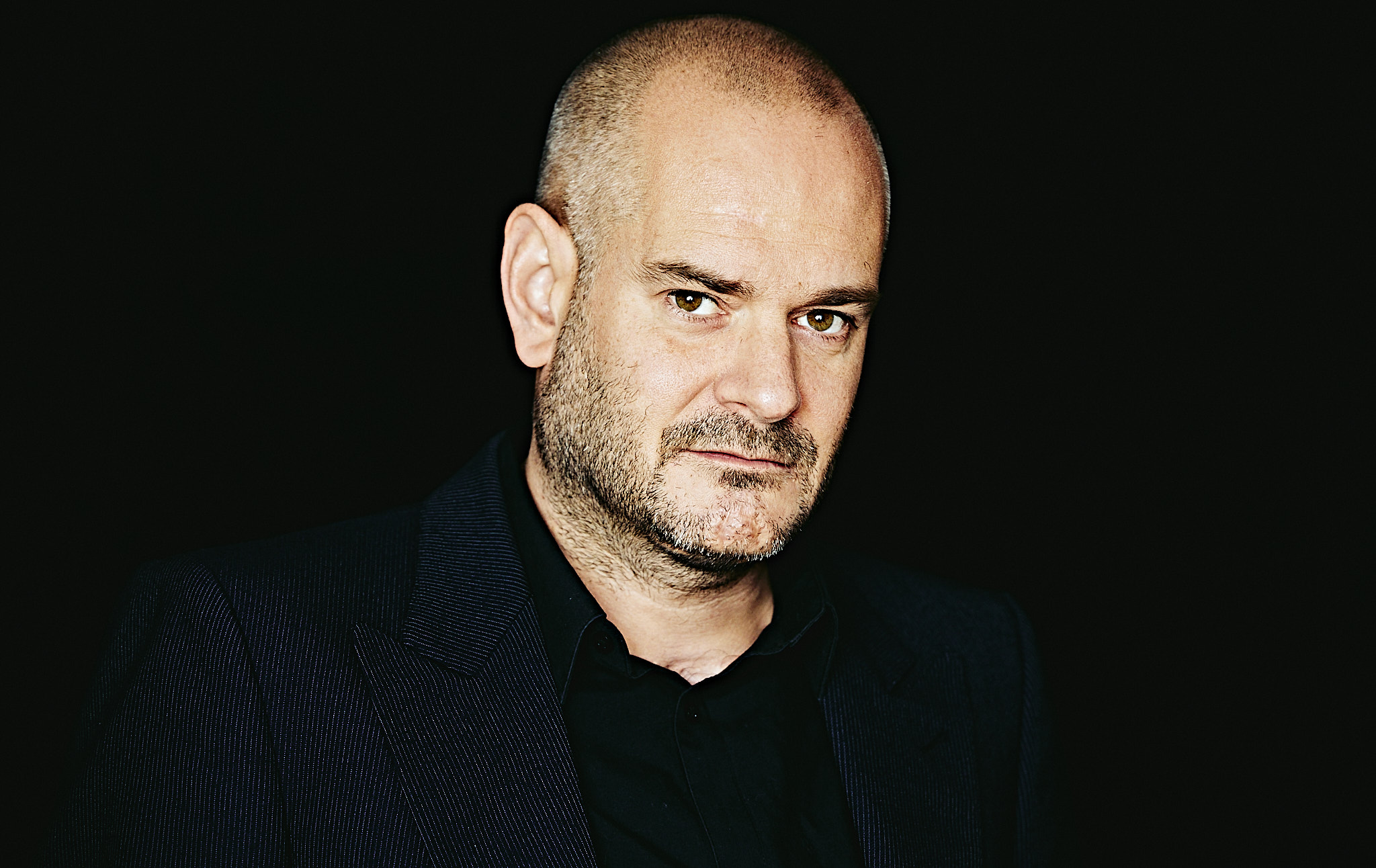
Portraits Jonas Lüscher November 2021
Fotografin: Ulrike Arnold(c) Ulrike Arnold/Jonas Lüscher

Published from Adrian Schräder on October 20, 2022.

More from our scouts

‘I keep starting all over again’
20.11.2025

‘I keep starting all over again’

Amidst the moving boxes in London, actress Elsa Langnäse talks about presence and why she prefers acting to performing.

David Suivez
David Suivez
Reading material to help you join in the conversation
27.11.2025

Reading material to help you join in the conversation

During a ‘cold reading’, the auditorium becomes a workshop. Those listening join in the discussion. The feedback on the text is put to good use by the authors.

Raphaela T. Ernst
Raphaela T. Ernst
Clicks as a weapon
17.09.2026

Clicks as a weapon

Global conflicts are now also played out on digital platforms through the use of disinformation. ‘The End of the West’ at the Winkelwiese Theatre tells the story.

Sira Negri
Sira Negri

More from your scouts

Sandra Smolcic
Sandra Smolcic
Adrian Schräder
Adrian Schräder
Sira Negri
Sira Negri
Ron Orp
Ron Orp
Fabio Gassmann
Fabio Gassmann
Rebekka & Sebastian
Rebekka & Sebastian
All scouts